Scuba Certifications and Limits
Scuba certifications and limits help us plan diving that is right for you. At Dive UK Hurghada, safety comes before a particular dive site, an extra few minutes or a deeper photograph. We will never ask you to dive beyond your certification limits.
We welcome divers from recognised training organisations, including PADI, SSI, SDI, TDI, NAUI, BSAC, CMAS and GUE. Your card tells us part of the story. Your experience, recent diving and confidence help us understand the rest.
Why we check your scuba certifications and limits
Before diving, we ask to see your qualifications and discuss when you last dived, the depths you normally visit and the equipment you use. Please tell us about any restrictions, additional training or concerns. We check the limits attached to your actual qualification rather than assuming that similarly named courses are identical.
A more experienced buddy or an instructor beside you does not remove your limits on a normal guided dive. Further training is arranged as a course, under the standards for that course. We do not turn a holiday dive into an unplanned training exercise.
Common PADI depth limits
These examples help explain the differences. They are maximum boundaries, not depths you must reach. A shallower limit may apply because of your training, age, gas, conditions or the agreed dive plan.
- PADI Scuba Diver — up to 12 metres
- This qualification requires direct supervision by a PADI Professional. It is different from Open Water Diver.
- PADI Open Water Diver — up to 18 metres
- For divers aged 15 and over, or the maximum depth reached during training if shallower. Junior divers have additional restrictions.
- PADI Advanced Open Water Diver — up to 30 metres
- For divers aged 15 and over with the relevant training. Junior limits are lower.
- PADI Deep Diver — up to 40 metres
- For appropriately trained divers. This is recreational deep-diving training, not permission for planned decompression diving.
Rescue training, Nitrox, Sidemount or a professional title does not by itself give you unrestricted depth. We check your relevant training and apply the most restrictive limit for the dive.
Junior divers need particular care
PADI Junior Open Water Divers aged 10–11 are limited to 12 metres and dive with a PADI Professional or certified parent or guardian. Those aged 12–14 are limited to 18 metres and dive with a certified adult. Junior Advanced Open Water Divers aged 12–14 have a maximum depth of 21 metres.
We confirm each young diver’s certification and supervision requirements before booking. Children under 15 train one-to-one with us unless learning with a sibling or family member. For divers under 16, a parent attends at least day one and further days if needed. Safety comes first, especially with children.
Tell us before you reach a limit
Monitor your own depth, gas and dive computer throughout the dive. Stay close enough to communicate with your buddy and instructor. If you are approaching your depth limit, the agreed gas turn point or your no-decompression limit, get your instructor’s attention early and show them the relevant reading.
We agree signals and the dive plan during the briefing. Ask us to explain anything you are unsure about before entering the water. Do not wait for an alarm or assume another diver’s computer gives the same information as yours.
You can call an end to a dive at any time. Tell us if you feel uncomfortable, cold, tired or simply want to finish. We will support a controlled, safe end to the dive; there is no pressure to continue for the group.
No unplanned decompression diving
Our normal recreational dives stay within no-decompression limits. We do not allow planned decompression diving unless it has been discussed, agreed and properly planned with us in advance. This also requires suitable certification, equipment, gases, support and arrangements for the proposed dive.
Advance notice is not automatic permission. We must confirm whether the dive can be supported safely. A safety stop on a recreational dive is different from a mandatory decompression stop; allowing time for a safety stop does not make it acceptable to exceed your no-decompression limit.
If your computer shows an unexpected decompression obligation or another problem, alert your instructor immediately. Follow your training and the appropriate procedures for your computer. Do not ignore an obligation or make a rushed ascent.
Depth is only one part of the plan
Your gas supply, no-decompression time, conditions, equipment and personal comfort all matter. When diving with nitrox, the analysed oxygen content and maximum operating depth also limit the dive. Nitrox does not qualify you to dive deeper.
Wreck interiors, caves and other overhead environments need specific training and planning. A depth qualification alone is not permission to enter them. We choose sites and routes around the people diving that day, and change the plan if conditions make it necessary.
Enjoy the diving that suits you
Some of the Red Sea’s most enjoyable diving is shallow. There is no need to chase depth to have a memorable holiday. On your first dives with us, we take time to understand your buoyancy, gas use and comfort so we can plan suitable diving together.
If you want to develop your experience, explore our Advanced Open Water course or Deep Diver course. Training is a positive next step when you are ready, not a reason to exceed today’s limits.
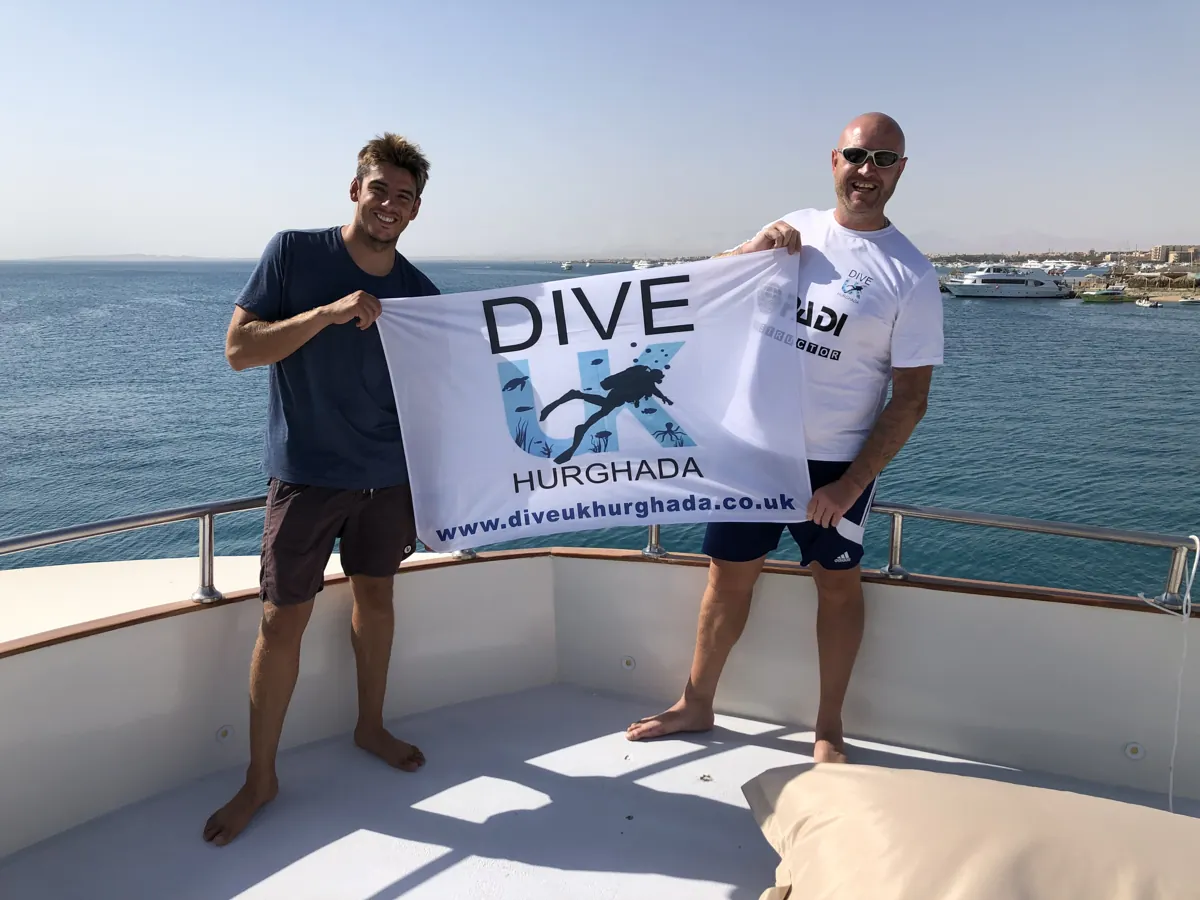
Questions about your scuba certifications and limits?
Call or message us on WhatsApp or email our team with your qualification, age, recent experience and the diving you hope to do. We will explain suitable options before you book.
We can arrange daily diving or include it in a diving holiday package. Whatever you choose, your safety and enjoyment guide the plan.