Coral Reefs in Hurghada: Gardens, Slopes and Sandy Channels
The coral reefs in Hurghada are more than a colourful backdrop. Their shapes create routes, shelter and feeding places for marine life. Understanding a little of the landscape makes a guided dive more interesting, even before you learn the names of the fish.
What makes the coral reefs in Hurghada special?
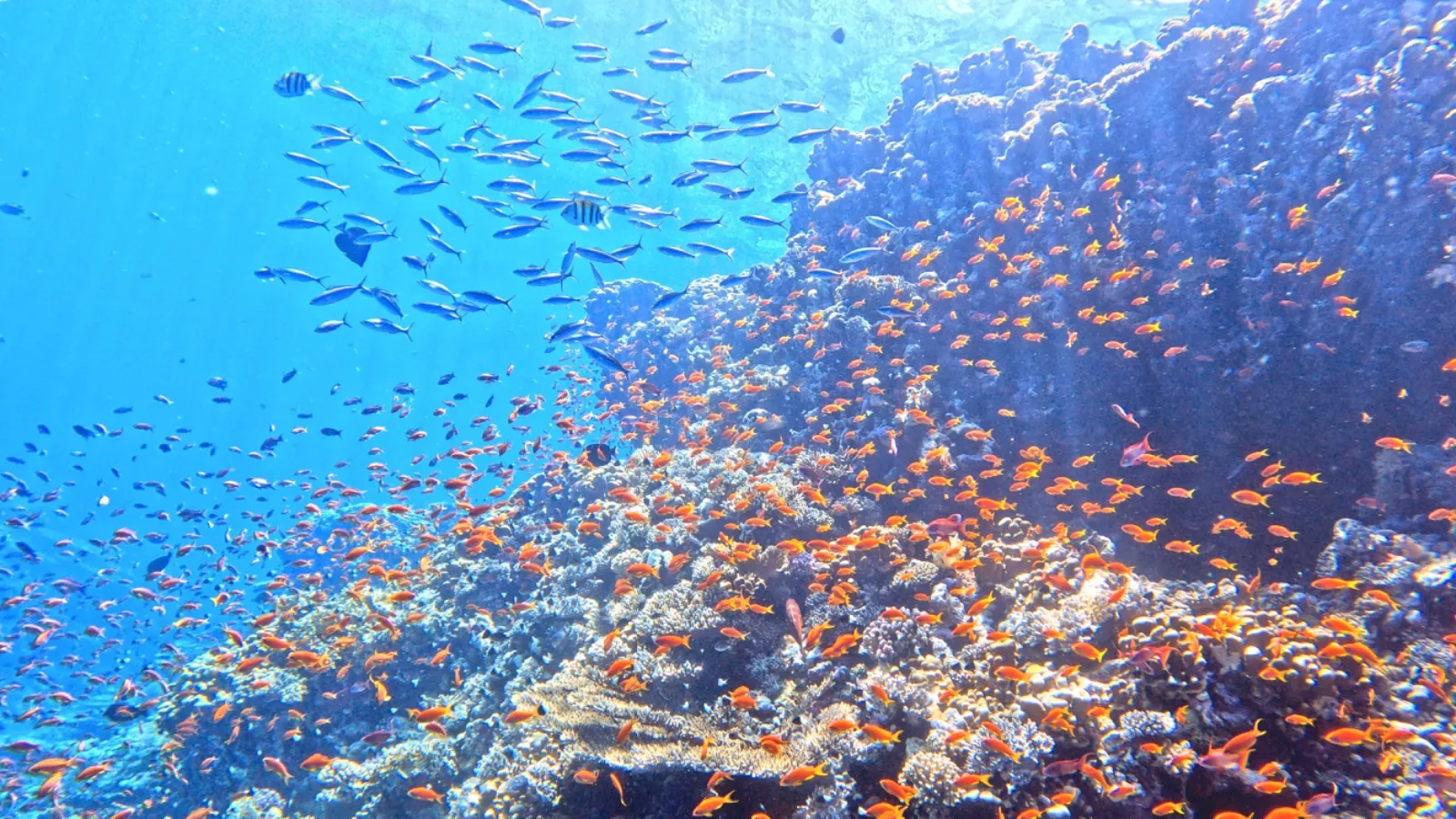
Corals are animals. Hard corals build stony skeletons which, over time, help form the reef structure. Many shallow-water corals have a close relationship with tiny algae that use sunlight. This is one reason the sunlit parts of a reef are so important.
A reef is also a living habitat for other animals. Open water above it, sheltered spaces within it and neighbouring sand all play different roles. Look at the whole scene rather than treating a dive as a race between individual sightings.
Hurghada coral gardens: colour without chasing depth
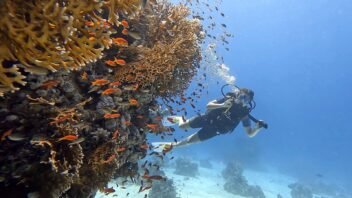
A coral garden is an area where coral formations spread across the seabed. Different shapes and heights create an underwater landscape that rewards a slow, careful route. You may see small fish close to shelter and shoals moving above the reef.
Many of our shallow dives in Hurghada explore colourful areas between five and fifteen metres. Suitable shallow diving can be very rewarding for qualified beginners, although weather, current and the group’s experience still matter.
Reef slopes and isolated coral heads
A slope follows the changing depth beside the reef. A pinnacle or isolated coral head rises separately from its surroundings. These features can give a dive a different feel from a broad garden.
Your instructor chooses a route and depth appropriate to the conditions and divers. There is no need to follow a slope deeper simply because it continues downwards. Stay with the agreed plan and within your training.
Notice how shelter, light and movement change as you pass around a feature. Small differences in the surroundings can reveal different fish and behaviour without needing to travel far.
Sand is part of the reef landscape too
Sandy channels separate coral areas and can make useful reference points during a briefing. They are also habitats in their own right, so avoid assuming a patch of sand is empty.
Keep your fins clear of the bottom. Kicking up sediment can obscure the view and disturb nearby life. If your buoyancy feels uncertain, tell your instructor before trying to approach closely for a photograph.
Which coral reefs in Hurghada might we visit?
Our Hurghada top dive sites guide introduces several options. The more detailed Abu Ramada guide explains why Gota Abu Ramada is often described as an aquarium reef. Sites are selected for the day rather than guaranteed in advance.
A five-day stay gives you more opportunities to enjoy different suitable reefs. Sometimes revisiting a reef is worthwhile too: a different route or simply a more settled second dive can reveal things you missed.
Looking after coral reefs in Hurghada
Keep a comfortable distance, control your buoyancy and avoid touching or collecting anything. Do not hold coral to steady yourself. Follow the briefing and read our diving safety advice if you are preparing for your trip.
For the animals that live around these habitats, continue to marine life in Hurghada. This guide focuses on the reef landscape; that companion page helps you know what to watch for.
Make time for several days of diving
Our daily diving packages include two guided dives per day. Five consecutive days cost £325 for one diver, or £300 per person for two divers booking together. Air, weights, boat lunch and marine fees are included. Equipment hire is £100 per person for five days; dive computers are separate.
Local transfers within two kilometres of our facility are included; ask for a quote for other areas. See the current prices for other booking sizes. You can also combine diving with accommodation through our diving holidays. Tell us your qualification, last dive and dates so we can suggest a suitable plan.